

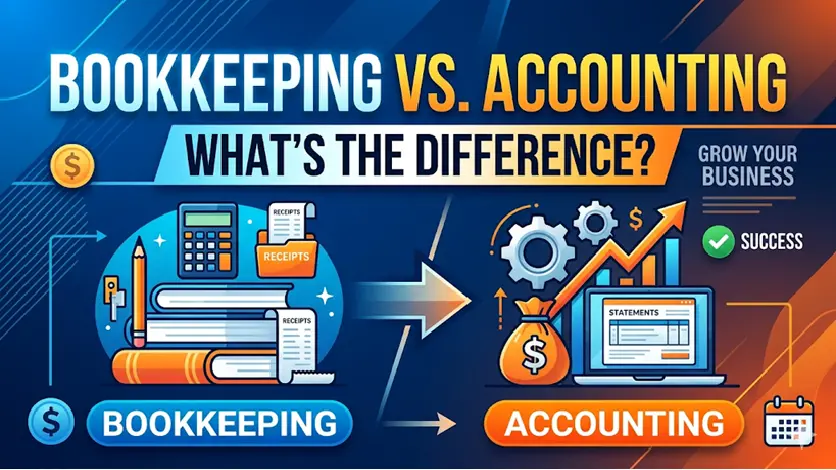
For any business, clear financial records are very important. They help the business grow in the right direction. Many people use the words bookkeeping and accounting as if they mean the same thing, but they are actually two different parts of financial management.
- Bookkeeping means recording the daily money matters of a business. This includes management of sales, debtors/receivables, purchases, creditors/payables, receipts, and payments. Its main job is to keep all financial records correct and updated.
- Accounting uses the information recorded in bookkeeping and turns it into useful business guidance. An accountant studies, organizes, explains, and summarizes financial data. Accountants use bookkeeping records to prepare financial statements, manage tax matters, check records, and help in business planning.
Why Financial Management is Crucial for Business Success
Ignoring financial records can create serious problems for a business. In fact, poor financial management is one of the common reasons many businesses fail. Good accounting and bookkeeping are important for the following reasons:
- Informed Decision-Making: Accurate books show the real picture of cash flow, profit, and overall financial health. This helps business owners make decisions based on facts instead of guesswork.
- Tax Compliance and Preparation: Proper records help in filing taxes correctly. They also help businesses claim allowed deductions and reduce the risk of penalties or tax audits.
- Securing Funding and Investment: Banks, investors, and lenders usually ask for proper financial statements before giving loans or investing money in a business.
- Cash Flow Management: Tracking money coming in and going out helps a business make sure it has enough cash to pay its bills and daily expenses on time.
Key Requirements to Manage Business Finances Effectively
To manage business finances properly, a business needs clear systems, useful tools, and regular recordkeeping.
1. Robust Accounting Software
Today, most businesses use digital tools to manage their finances. Cloud-based accounting software can connect with bank accounts, create invoices, and show financial information in real time. Some popular options are:
- QuickBooks Online: A good option for growing businesses that need detailed reports and inventory features.
- Xero: Known for being easy to use and for working well with many other business apps.
- Wave: A useful free option for freelancers and small service-based businesses.
2. Standardized Workflows
- Receipt Management: Businesses should use digital tools, such as Dext or Hubdoc, to scan and save receipts quickly.
- Bank Reconciliation: Bank and credit card statements should be matched with recorded transactions at least once a week. This helps catch mistakes early.
- Chart of Accounts (CoA): A chart of accounts is a proper list of all financial categories in a business. It helps record income and expenses in the correct place.
Solutions for Small Businesses and Startups Without a Full-Time Accountant
Many small businesses and startups do not have enough budget to hire a full-time accountant. The good news is that they still have other options to manage their finances professionally without spending too much money.
Outsourced Accounting and Bookkeeping Services
Outsourcing means hiring an outside professional, firm, or freelance consultant to manage accounting and bookkeeping tasks. This is usually cheaper than hiring a full-time employee. The services can increase or decrease depending on the number of monthly transactions. They may include basic data entry, bank reconciliation, financial reporting, and tax filing.
Fractional CFO Services
Some businesses need expert financial planning, tax advice, and forecasting, but they are not ready to hire a full-time Chief Financial Officer. In this case, a fractional CFO can help. A fractional CFO provides high-level financial guidance on a part-time or project basis.
Founder-Led Bookkeeping (The DIY Approach)
In the early stage of a business, many founders manage their books themselves. This can save money at the start, but it also requires time and basic accounting knowledge. The founder must set aside regular weekly time to record transactions and keep the books updated.
Core Benefits of Professional Accounting Services
Getting professional help for accounting and bookkeeping can give a business many long-term benefits:
| Benefit | Description |
|---|---|
| Time Savings | When data entry and reconciliation are handled by a professional, business owners can spend more time on sales, operations, and business growth. |
| Error Reduction | Professional support reduces mistakes such as wrong entries, incorrect expense categories, and missed tax deadlines. |
| Strategic Tax Planning | Accountants do more than file tax returns. They also help find legal ways to reduce tax liability during the year. |
| Business Scalability | Proper financial records make it easier to grow the business, bring in new partners, or prepare the business for a future sale. |