Business tax returns in the United States can seem complex,
especially when dealing with multiple forms like form 1120, 1120 tax form,
IRS form 1120, form 1065, and Schedule C with Form 1040. Many business
owners search for terms like “form 1120,” “1120 form,” “1120 tax form,” and
“form 1065” to understand how to properly report their income and stay
compliant with IRS regulations.
This guide provides a complete and simple explanation of business
tax returns, covering corporations, partnerships, and sole proprietors.
Whether you are a small business owner, freelancer, or accountant, this blog
will help you understand how each tax form works and when to use it.
Understanding Business Tax Returns in the USA
Business tax returns are used to report income, expenses,
profits, and tax liability of a business. The tax return you need to file is
determined by the structure of your business.
There are three main categories:
Corporations use Form 1120 or Form 1120-S
Partnerships use Form 1065
Sole proprietors use Schedule C with Form 1040
Each of these forms has a specific purpose, and selecting
the right one is important for accurate tax filing.
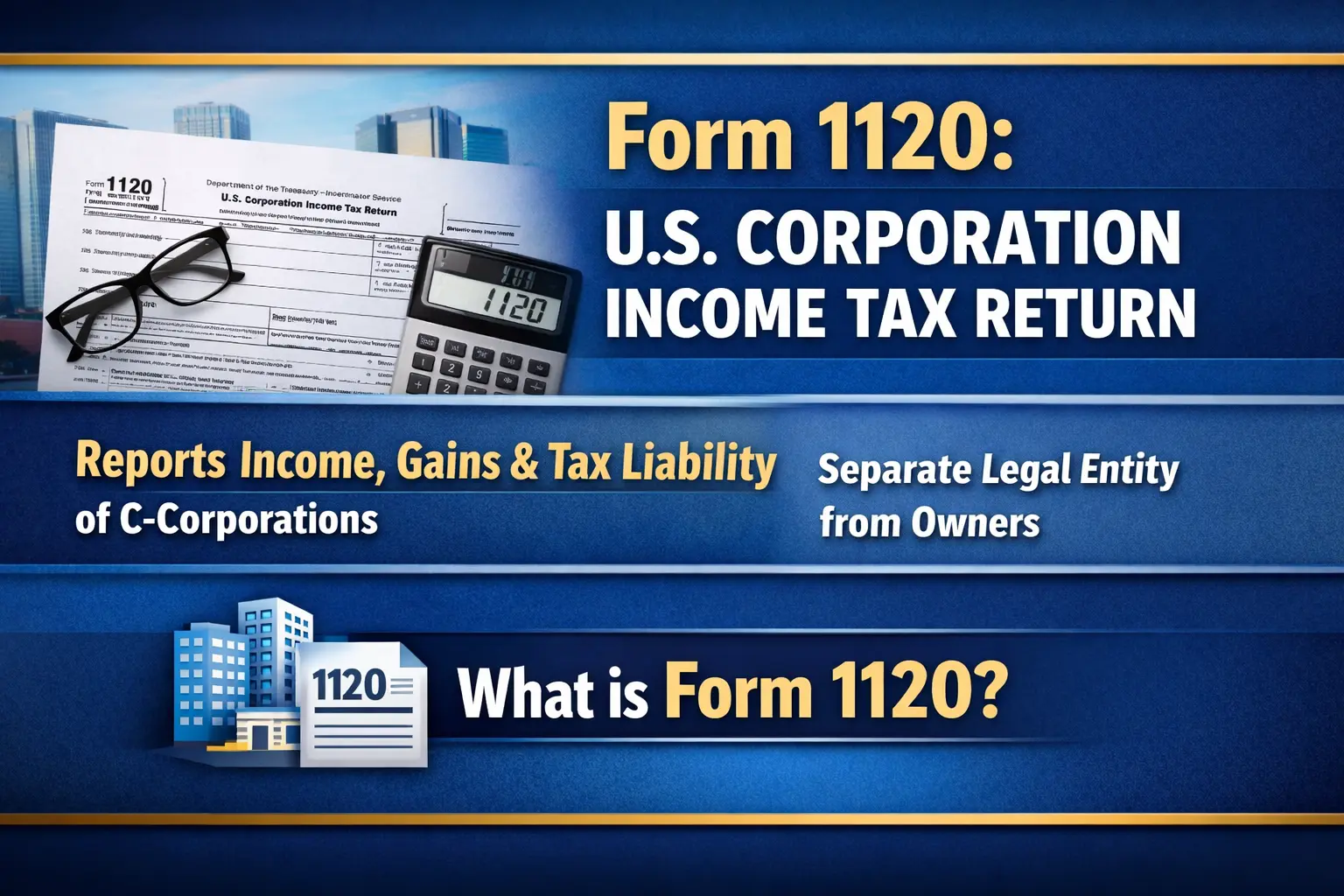
Form 1120: U.S. Corporation Income Tax Return
Form 1120 is used to declare income, gains, losses,
deductions, and compute tax liability by C-Corporations.
What is Form 1120
Form 1120 is the official tax return used to submit by
corporations that are considered legal separate entities from their owners.
This means the corporation is responsible for paying taxes on its own profits.
Keywords like “form 1120,” “1120 form,” “1120 tax form,” and
“IRS form 1120” are highly searched because this form applies to many
registered companies in the U.S.
Who Needs to File Form 1120
You must file Form 1120 if:
Your business is registered as a C-Corporation
Your company operates in the United States
You have taxable income at the corporate level
Even if the corporation has no income, filing may still be
required to maintain compliance.
Key Components of Form 1120
Form 1120 includes several important sections:
Income section where total revenue is reported
Deductions section including operating expenses
Tax computation section
Credits and payments section
The final result determines how much tax the corporation
owes.
How Form 1120 Works
A corporation calculates its net income by subtracting
expenses from total revenue. Than tax will be computed on this income.
A key concept to understand is double taxation. The
corporation is taxed on its earnings, and shareholders may also be taxed on any
dividends they receive.
Form 1120-S: Tax Return for S-Corporations
Is used by S-Corporations (are the corporates who pass
through their income to the shareholders).
What is Form 1120-S
Unlike Form 1120, the 1120-S form does not pay tax at the
corporate level. Income is passed through to shareholders.
This structure avoids double taxation and is one of the
reasons many businesses choose S-Corporation status.
Who Should Use Form 1120-S
Businesses that elect S-Corp status with the IRS must file
this form.
Requirements include:
Limited number of shareholders
U.S.-based ownership
Specific eligibility criteria
Schedule K-1 in 1120-S
Each shareholder receives a Schedule K-1, which shows their
share of income, deductions, and credits.
This information is then included by individuals on their
personal Form 1040 tax return.
Form 1065: Partnership Tax Form
The return Form 1065 is used by business structured
as partnerships.
What is Form 1065
Form 1065 is an informational return used to report the
income, deductions, and financial details of a partnership.
In contrast to corporations, partnerships do not pay taxes
at the entity level. Instead, the profits are distributed to the partners.
Who Needs to File Form 1065
You must file Form 1065 if:
Your business has two or more owners
You operate as a partnership or LLC taxed as a partnership
Keywords like “form 1065,” “1065,” and “partnership tax
return 1065” are commonly searched for this reason.
Schedule K-1 for Partners
Each partner receives a Schedule K-1 that shows their share
of:
Income
Losses
Deductions
This is then reported on their personal tax return.
How Form 1065 Works
The partnership calculates total income and expenses.
Instead of paying tax, it distributes profits among
partners.
Each partner is responsible for paying taxes individually
according to their share of the income.
Schedule C with Form 1040: Sole Proprietors
Sole proprietors use Schedule C along with Form 1040 to
report business income.
What is Schedule C
Schedule C is used by individuals who run a business without
forming a separate legal entity.
This covers individuals such as freelancers, consultants,
and small business owners.
Who Uses Schedule C
You must use Schedule C if:
You are self-employed
You run a small business individually
You earn freelance or contract income
How Schedule C Works
You report:
Total business income
Business expenses
Net profit or loss
This net income is then included in your Form 1040.
Self-Employment Tax
Sole proprietors must also pay self-employment tax, which
covers Social Security and Medicare.
Comparison of Business Tax Forms
Understanding the difference between these forms is
critical.
Form 1120 is used by C-Corporations and pays tax at
corporate level
Form 1120-S is used by S-Corporations and passes income to
shareholders
Form 1065 is used by partnerships and passes income to
partners
Schedule C is used by individuals and reports business
income on personal tax return
Choosing the Right Business Structure
The choice between these forms depends on your business
goals.
C-Corporation is suitable for large businesses and
investment growth
S-Corporation is ideal for small to medium businesses
seeking tax savings
Partnership is useful for businesses with multiple owners
Sole proprietorship is simple and easy to manage
Common Mistakes in Business Tax Filing
Many business owners make errors that can lead to penalties.
Filing wrong form
Not issuing Schedule K-1
Incorrect income reporting
Missing deadlines
Mixing personal and business expenses
Avoiding these mistakes is essential for compliance.
Filing Deadlines
Form 1120 is generally due by April 15
Form 1120-S and Form 1065 are usually due by March 15
Schedule C follows Form 1040 deadline
Extensions are available but must be filed on time.
Why These Keywords Matter for SEO
This blog uses high-demand keywords such as:
form 1120
1120 form
1120 tax form
IRS form 1120
form 1065
1065 partnership tax return
schedule c tax form 1040
These keywords help your website rank on Google and attract
potential clients.
Professional Insight for Accountants and Bookkeepers
If you are offering accounting or bookkeeping services,
understanding these forms is extremely valuable.
Clients often need help with:
Business tax filing
Income classification
Expense tracking
Compliance
By mastering Form 1120, Form 1120-S, Form 1065, and Schedule
C, you can position yourself as an expert and attract high-paying clients.
Final Thoughts
Business tax returns in the United States are structured
based on the type of business entity.
Form 1120 is used by corporations
Form 1120-S is used by S-Corporations
Form 1065 is used by partnerships
Schedule C is used by sole proprietors
Understanding these forms allows business owners to file
correctly, avoid penalties, and optimize their tax position.
For professionals, this knowledge creates opportunities to
provide valuable services and grow a successful accounting practice.