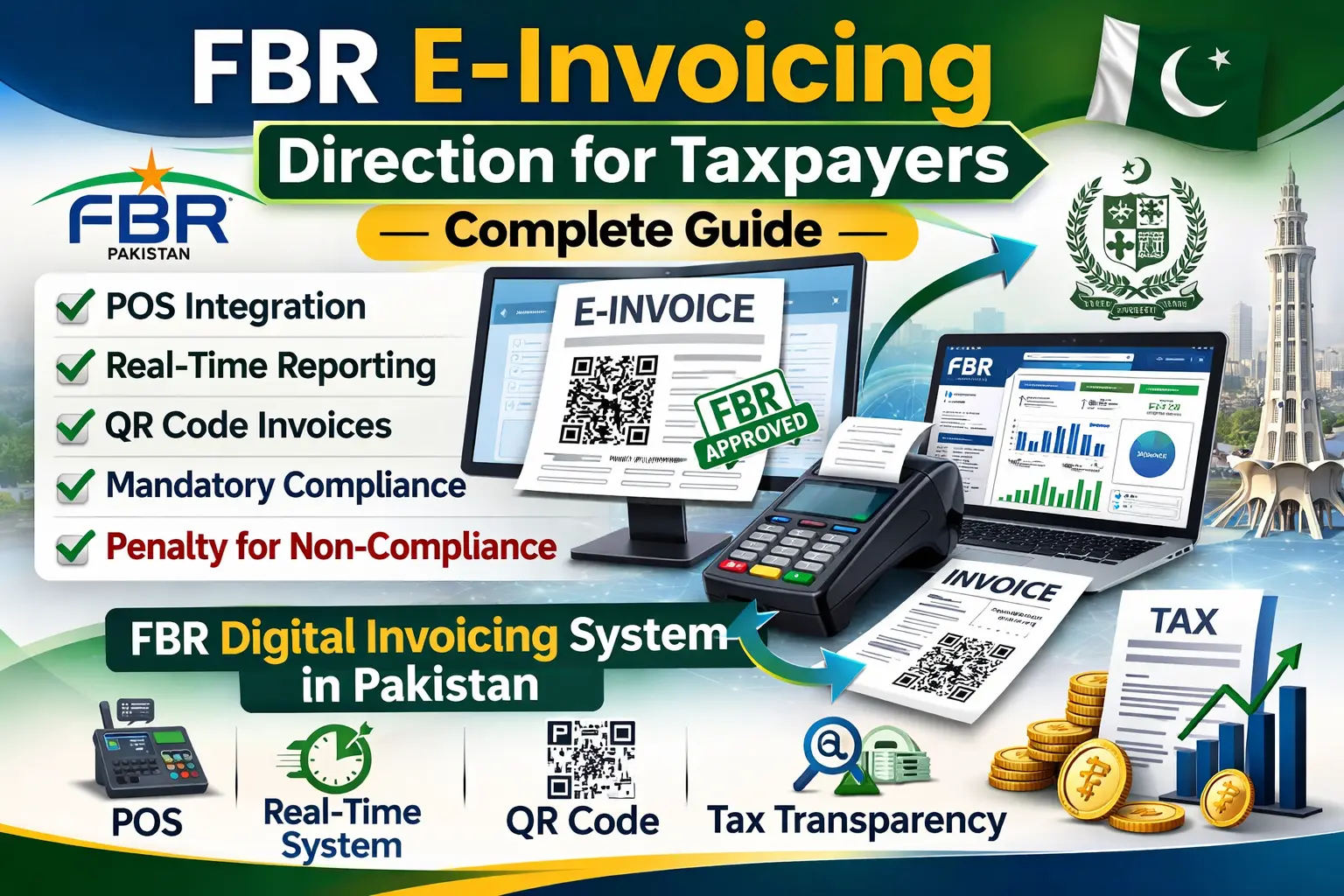
A Guide to FBR E-Invoicing for Taxpayers in Pakistan
A Simple Breakdown of the FBR Digital Invoicing System
Pakistan’s tax system is changing fast. The Federal Board of Revenue (FBR) is pushing for more honesty and transparency, and digital invoicing is a big part of that game plan. E-Invoicing rules are here to stop fake bills and all the creative ways some businesses try to dodge taxes.
What’s FBR E-Invoicing All About?
E-invoicing means your business has to issue invoices through an online system that talks straight to the FBR. Every invoice you make goes through a digital portal, so the FBR sees it in real time.
Why Did FBR Roll This Out?
It’s about transparency. Way too many businesses used to hide their sales or make up fake invoices just to pay less tax. That meant less money for the country and a pretty unfair playing field. Digital invoicing blocks those shortcuts and pushes everyone to play it straight.
The Main E-Invoicing Rules for Taxpayers
Here’s what the FBR wants from you:
1. Your invoicing software or POS must connect to FBR systems. Send your invoices right away—not next week.
2. Every invoice must be created electronically. It needs to include the date, invoice number, buyer details, sale amounts before and after tax, and the buyer’s NTN.
3. Each invoice also needs a QR code generated by the system, an FBR invoice code, seller and buyer info, tax breakdowns, and a clear product description. That QR code? It should scan easily—proof you’re in the clear.
4. Keep digital records of all invoices for at least six years.
Who Has to Use FBR E-Invoicing?
Not everyone, but plenty of businesses do. If you’re in any of these sectors, you’ve got to plug in:
- Retail: Shops, chains, malls
- Hospitality: Restaurants, hotels, marriage halls, guest houses
- Healthcare: Hospitals, labs, clinics
- Services: Salons, gyms, photographers, event planners
- Professionals: Accountants, auditors
- Education: Private schools, colleges, universities
- Others: Courier companies, money exchangers, intercity transport
What You Need To Do If This Applies To You
- Set up FBR-approved invoicing software. Don’t just pick anything off the internet.
- Make sure your POS works with the system and keeps reporting as required.
- Report problems within 24 hours if your system goes down.
- Cooperate with FBR whenever they ask for records.
- Keep all your digital records safe.
How E-Invoicing Helps
- Transparency goes up—a clear record of every sale.
- Record-keeping gets easier. No more scrambling through faded paper receipts.
- It’s much harder to slip fake invoices through the cracks.
What Problems Could Pop Up?
Let’s be honest, switching over isn’t always easy:
1. New tech isn’t cheap. You may need new software or hardware.
2. Training staff takes time.
3. Fixing mistakes is a hassle. If you mess up on an invoice, sorting it out can be a pain.
The Ups and Downs
For The Government
Good Stuff:
- FBR sees sales in real time. No waiting around.
- Tax dodging and fake invoices become tough tricks to pull.
- Audits are simpler because everything’s clear and digital.
- Less paper, and fewer trips to offices.
Not-So-Good Stuff:
- IT systems need constant care—support, updates, troubleshooting.
- Systems go down sometimes. Both you and FBR aren’t immune to outages, though the FBR does plan for emergencies.
- Data privacy matters. The risk is real if everything’s online, so the government needs to stay on guard.
- Not every business warms up to digital rules overnight. Some folks like paper. Cutting over takes time.
For Businesses
The Perks:
- Less paperwork. Invoicing is quicker.
- Record-keeping is way less messy.
- No running to FBR’s office.
- Free setup from FBR, and sometimes help with connecting.
- Your tax compliance gets simpler and lowers your chances of arguments with tax officers.
The Headaches:
- Software or hardware upgrades cost money, even if FBR isn’t charging you directly.
- You have to set things up with FBR-approved partners.
- Staff have to adjust and learn the ropes.
- Miss a deadline on integration? You’re open to penalties.
- Once you send an invoice, changing or canceling it is tricky—you need FBR’s approval.
- If your internet goes out, no invoices can be made. It all stops.
- Basically, you get more transparency and control, but getting started takes work and mistakes carry consequences.
Tips for Easier Compliance
If you want this to go smoothly:
- Stick with FBR-approved software that links directly to their online system.
- Don’t skip team training—it’ll save you a world of headaches.
In short, FBR’s e-invoicing is a game-changer for Pakistan’s tax scene. Plug in early, train up, and you’ll get a system that keeps your business compliant, lessens fraud, and makes record-keeping a breeze. Adapt now and you’ll have an easier time when e-invoicing becomes the norm.